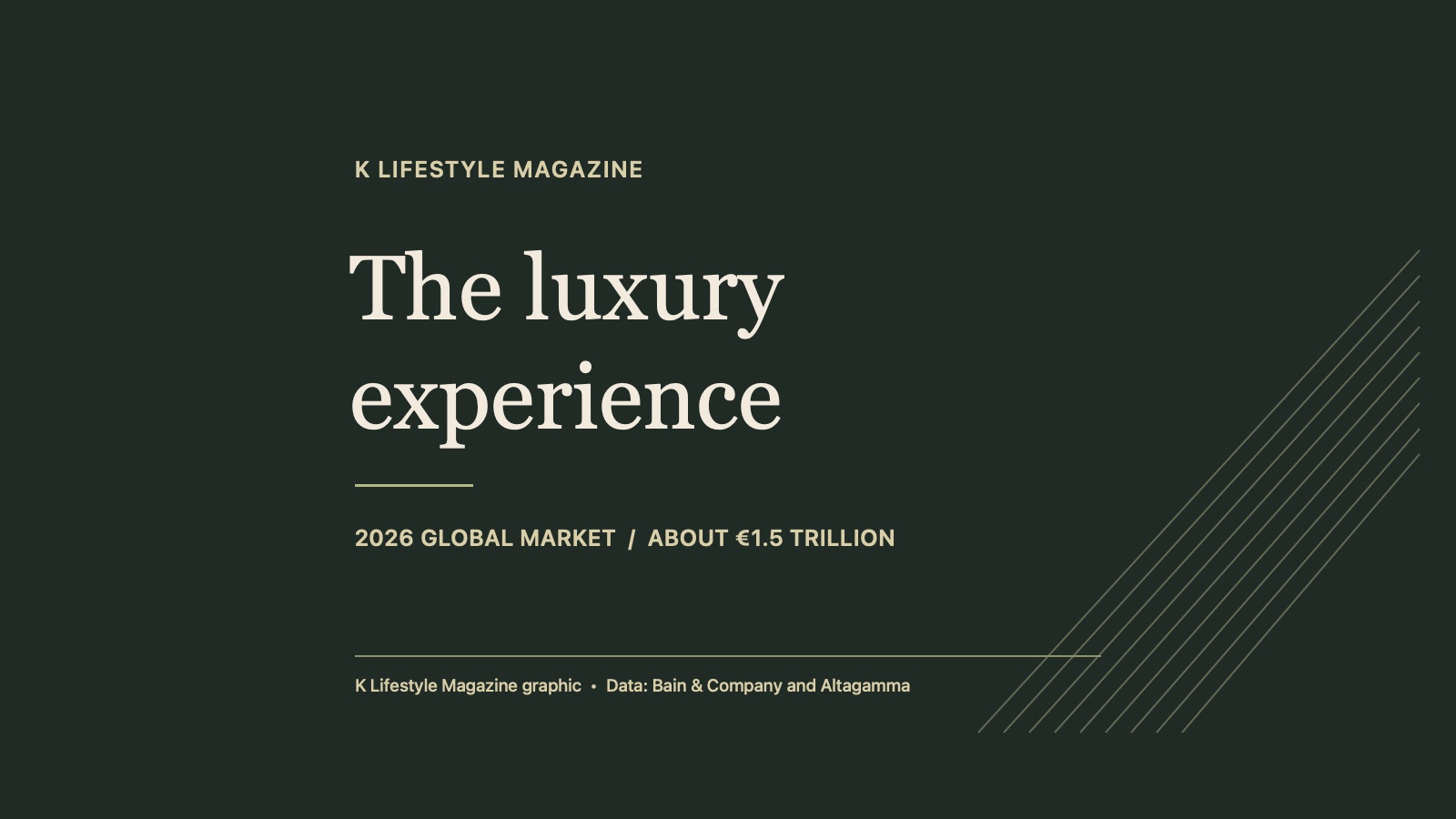
A new Bain and Altagamma forecast puts the global market at about €1.5 trillion. Hotels, dining and cruises help explain why a luxury purchase is no longer the only way to mark an occasion.
A milestone once made for an easy shopping brief: find the piece that will mark it. Now the same budget might go toward a hotel stay built around an exhibition, a dinner with family, or a trip that would be hard to repeat. The two choices are competing for the same occasions, even as spending on luxury goods starts to recover.
The annual Bain and Altagamma luxury study, released November 18, projects worldwide luxury spending of about €1.5 trillion in 2026, flat to 2% higher than 2025 at constant exchange rates. Bain’s definition goes well beyond fashion and accessories. It includes everything from luxury cars and art to hospitality and high-end dining.
Experiences are gaining. Goods are recovering.
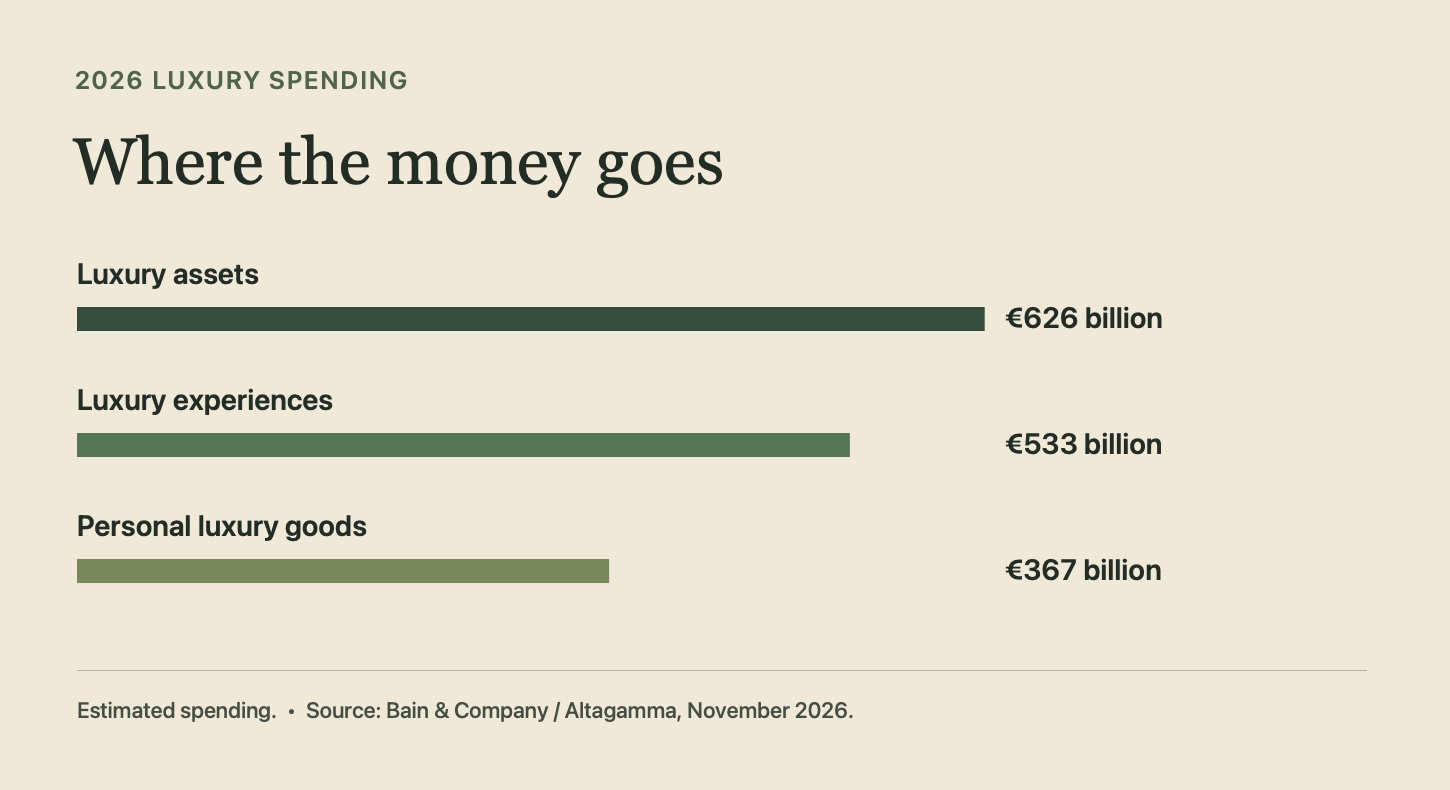
Bain expects spending on luxury experiences to reach €533 billion, up 2% to 4% from a year earlier. Hospitality, luxury cruises and gourmet dining are among the areas gaining ground. That does not mean travelers have stopped shopping altogether. Spending on personal luxury goods is forecast at €367 billion, up 2% to 4% at constant exchange rates after two years of slight declines. The Altagamma release puts the overall market at €1.526 trillion, with luxury assets the largest category by spending despite weaker performance.
The distinction matters. Luxury goods spending can recover even as fewer people buy into the category. Bain estimates the number of personal luxury goods customers fell from about 330 million in 2025 to 315 million in 2026. At the same time, the firm sees spending shifting toward travel and hospitality among visitors to Europe. The numbers don’t tell us what every shopper did; they show how differently the recovery is playing out across categories.
What makes a splurge worth it?
Start with what you want to remember. For a trip, pick one thing worth organizing the visit around, then compare what the whole visit costs, including transport and any cancellation restrictions. For a purchase, ask how often you’ll use it, how it can be maintained or repaired, and whether you’d still want it without the occasion attached. If the object is something you’ll use for years, it may be the more lasting choice. If the point is time together, buy the part of the experience that actually gives you that time.
The market forecast is a useful lens, not a shopping list. The better question is whether the thing you’re paying for will still feel worth it after the occasion has passed.