
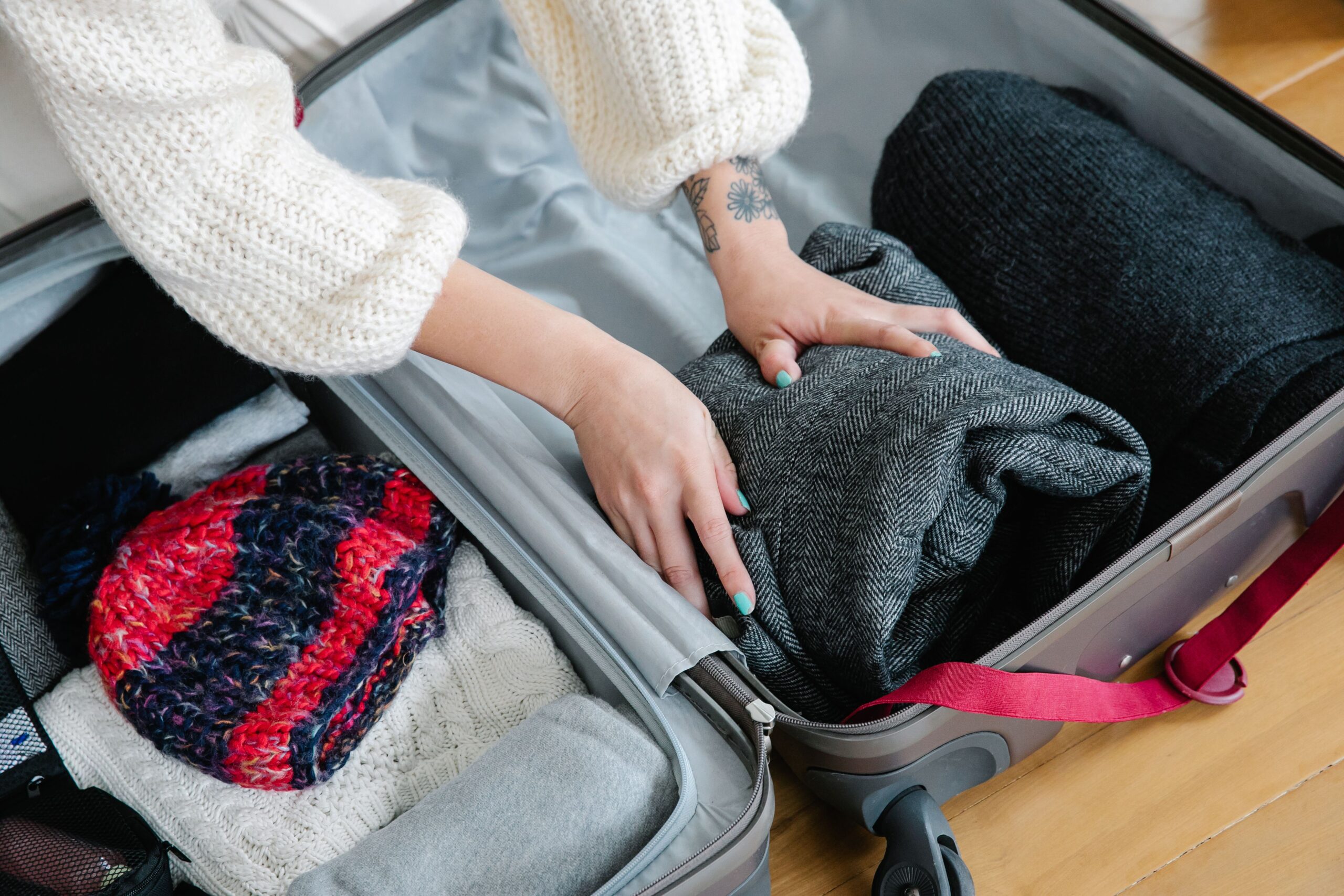
A short trip can produce a surprisingly complicated bag. Two nights away invite imagined possibilities: an unexpected dinner, a long walk, a change in weather, perhaps a completely different version of yourself. Soon the luggage contains several weekends, though you will only be taking one.
The useful starting point is the trip’s actual shape. Write down the journey, the places you expect to go and any plans with a particular dress requirement. Add the forecast close to departure. Those details provide a better packing brief than an aspirational photograph of someone else’s escape.
A well-considered weekend wardrobe offers enough choice to feel comfortable without requiring a fresh decision every morning. It also makes sense outside the hotel room. You can carry it along a station platform, find a warm layer without emptying everything and repack without turning Sunday afternoon into a logistical exercise. The aim is a bag that supports the trip you want to enjoy.
Begin with a small, honest itinerary
Before opening the wardrobe, divide the weekend into the occasions that actually matter. A Friday evening train, Saturday spent walking around a city, dinner with friends and a Sunday visit to a gallery form a different packing brief from a wedding at a country hotel. Even when both involve two nights, their clothing requirements have little in common.
For each part of the trip, note the likely conditions rather than an imagined outfit. Will you walk for several hours? Be outside after dark? Arrive before your room is ready? Go directly from a meeting to dinner? These questions reveal practical needs that a generic list misses. They may also show where the same clothes can work comfortably across several occasions.
Separate confirmed plans from possibilities. An invitation with a dress code belongs on the list. A restaurant you might book can usually be accommodated by a versatile combination unless it has specific requirements. If a possible activity needs bulky equipment or specialist clothing, decide whether it is likely enough to justify the space. You can also check whether appropriate equipment can be hired locally.
Leave some freedom in the itinerary itself. Packing for every hour as though it were a production schedule can make a short break feel brittle. One flexible outfit and a useful weather layer often allow more spontaneity than several highly specific looks.
Choose the bag for the journey
A beautifully made holdall can be satisfying to use, but its suitability depends on who will carry it and how far. A taxi-to-hotel trip asks different things of luggage from several train changes, stairs and a walk over uneven paving. Consider the whole route, including the return when you may be tired or carrying an extra purchase.
Look at the empty weight, opening, handles and carrying options of a bag you already own. Can you see the contents without pulling everything out? Does the shoulder strap sit comfortably when the bag is full? Can you manage it alongside your everyday bag? An additional pocket is useful only if it makes something easier to retrieve; more compartments can also create more places to forget things.
For a wheeled case, think about lifting as well as rolling. You may need to carry it up steps or place it on a luggage rack. For a soft bag, remember that a flexible exterior does not make an overfilled bag smaller. Pack it before measuring if you need to meet an allowance, following the carrier’s directions about handles, wheels and protruding pockets.
For flights, the UK Civil Aviation Authority’s baggage guidance makes the important distinction between the ticket you bought and a general idea of what airlines allow. Check the actual allowance for your booking, including dimensions, weight and number of pieces. Do not assume that a handbag or airport purchase can always travel separately.
If you need more space for medical supplies, accessibility equipment, children or a specific occasion, plan around those requirements first. A larger suitable bag can be the more comfortable decision. Travelling lightly is useful when it removes effort, not when it creates it.
Build complete outfits on the bed
Lay out the outfit you intend to wear during the journey, then add the clothes that genuinely extend it. For an ordinary two-night city break, a second bottom, a couple of fresh tops and a layer that works with both combinations can be a reasonable starting point. Adjust those quantities for your habits, the weather, your activities and whether rewearing a piece is comfortable for you.
The important unit is the complete outfit. A shirt may look adaptable but require a particular vest, bra or camisole. Cropped trousers may work with only one pair of shoes. A dress may need a slip or hosiery that you rarely keep beside it. Include those supporting pieces at the same time, rather than treating them as details to remember later.
Try on unfamiliar combinations before packing. Walk around, sit down and check the view from the side and back. If an outfit feels awkward at home, a hotel mirror is unlikely to resolve it. Use the fitting to notice whether a waistband is uncomfortable after sitting or a layer bunches under your coat.
Colour coordination can simplify the exercise without turning the weekend into a uniform. Choose pieces that already work together in your wardrobe. That might mean navy and cream, brown and pale blue, or a patterned dress with a familiar jacket. There is no obligation to build an entirely neutral capsule if those are not the clothes you enjoy wearing.
Once the combinations are laid out, photograph them if that helps. The image can remind you which shoes or underlayers belong with a particular outfit and reduce the temptation to add unrelated options just before departure.
Let shoes settle the difficult decisions early
Shoes often determine how much room is left for everything else. Start with the pair that suits the most demanding ordinary part of the trip. For a weekend involving substantial walking, that means familiar footwear you already know you can wear comfortably for the distances involved. An elegant appearance loses its appeal quickly when every next street feels like a negotiation.
A second pair earns its place when it solves a clear problem. A formal occasion may need different shoes from the journey. Wet weather may make a change useful. Swimming or a planned outdoor activity may require appropriate footwear. These are practical reasons, and they are more informative than a blanket rule about how many pairs a traveller should own or pack.
If you are bringing evening shoes, test them with the actual outfit and hosiery. Check that they are in usable condition, including soles and fastenings. Discovering a repair is needed the night before travelling can force a rushed substitution that affects the rest of the bag.
Pack shoes so that soles do not touch clean clothing. A simple washable bag or suitable cover can do the job; it need not match the luggage. Avoid forcing shoes into a shape that could damage them, and keep anything packed inside them protected. Wear the bulkier pair for the journey only if it is also comfortable and appropriate for that journey.
Plan for the weather you will meet
Check the forecast close to departure and look beyond the afternoon high. The temperature at breakfast, wind, rain and the amount of time spent outdoors can change which clothes are useful. A weekend that is mainly indoors may need a different outer layer from one spent moving between outdoor sites.
Build a small range of adjustable layers. A top, a comfortable knit and an outer layer can be separated as conditions change. Try them together before leaving, especially if your coat is close-fitting. Three useful items become less useful when their combined bulk makes it difficult to move.
Choose rain protection according to the route. An umbrella may suit short walks between buildings, while a suitable rain jacket may be more practical for exposed or active plans. Check the actual care and performance information for clothing you intend to rely on. A fashion description such as weather-ready is less useful than knowing what the item was designed to do.
Do not make one unlikely weather possibility responsible for an entire second wardrobe. Decide what is plausible, what would seriously disrupt your plans and which compact item answers that risk. For genuinely variable or demanding conditions, allow more space. The point of checking is to make an informed choice, not to minimise at any cost.
Give an important occasion its own space
For a wedding, performance, celebration or formal dinner, begin with that outfit before building the rest of the weekend. Work from the invitation and any venue guidance rather than guessing what the wording means. If it is unclear, asking the organiser is more reliable than packing several interpretations.
Lay out the entire combination, including jewellery, belt, appropriate underwear and any small accessory that is essential to the garment. Check for loose buttons, marks and repairs while there is still time to deal with them. A specialist item deserves more attention than a spare casual top because replacing it at the destination may be difficult.
Consider how the clothes will be handled on arrival. Will the accommodation have suitable hanging space? Is a garment bag practical for the route? If pressing is needed, check the care label and ask what services are available. Do not assume that steaming is appropriate for every fabric, trim or finish.
Keep the remaining outfits straightforward. Clothes for breakfast, travel and a casual walk do not need to compete with the main occasion. Reusing a jacket or cardigan may be possible, but avoid forcing versatility when it would compromise either comfort or the special outfit.
Take toiletries from your routine, not a fantasy routine
Look at what you actually use over a normal two-day period. Start with essentials, then add the products that make the trip more comfortable or enjoyable. A weekend does not usually require every product from the bathroom shelf, but it may require particular items that another person’s minimalist list leaves out.
Check what the accommodation supplies if that will influence what you bring. A listed hairdryer or toiletries provision can be helpful, but product suitability remains personal. If you need a particular product, bring an appropriate quantity rather than relying on a vague description of complimentary amenities.
Use containers intended for the product and close them carefully. Label anything that could be confused with something else. Keep liquids in suitable secondary containment and separate from clothing that would be difficult to clean. An attractive refillable bottle has little value if its lid opens when the bag is compressed.
For flights, consult the rules for the departure, transfer and return airports. GOV.UK’s liquids guidance explains that requirements can differ between airports. It also identifies items such as creams, pastes and mascara as liquids for security purposes. Check current guidance rather than assuming that a rule from your previous trip applies everywhere.
Medical products and essential supplies deserve their own planning. Check the relevant official requirements for your route and destination, and get professional advice where needed. Do not decant or relabel medication simply to make it fit a cosmetic packing system. Keep treatment and storage instructions more important than the appearance of the wash bag.
Pack technology by function
List the tasks you actually expect devices to perform. A phone may cover navigation, tickets, reading and casual photographs. If you plan to work, a laptop may be necessary. A camera may be a central pleasure of the weekend. Bring those things deliberately, while questioning devices that duplicate a function you will barely use.
Match chargers and cables to the equipment before packing. Plug them in at home if you are unsure whether a particular cable supports the charging or connection you need. A compact pouch is helpful when it prevents a search through the bottom of the bag, but an overflowing collection of spare cables simply moves the confusion into a smaller container.
Check the destination’s electrical supply and the compatibility of your equipment. A plug adapter and a voltage converter are not interchangeable products. Follow the device manufacturer’s instructions rather than assuming a familiar-looking socket or connector guarantees compatibility.
Battery rules also matter. The US Federal Aviation Administration’s PackSafe guidance says spare lithium batteries and power banks belong in cabin baggage, with terminals protected against short circuit. If a cabin bag is checked at the gate, those items must be removed. Check your airline’s current restrictions as well, including capacity and quantity limits.
Download essential tickets or booking details where the provider permits it, and know what you will do if the phone runs out of power. The answer may be a printed confirmation or simply having the relevant reference accessible elsewhere. Preparing one useful backup is more helpful than bringing several devices without a clear purpose.
Distinguish what you store from what you need to reach
A bag can be neatly packed and still be inconvenient. Think about the order in which you will need things. Tickets, identification, a payment method, reading glasses and any necessary personal supplies should not sit beneath the spare shoes. A layer for an air-conditioned carriage should be reachable before you become uncomfortable.
If your room will not be available when you arrive, keep whatever you need for the first few hours accessible. That might include a compact change of top, a small wash bag or the outfit for an appointment. If you will leave luggage in storage, check the arrangements rather than assuming you can reopen the main bag whenever you wish.
For air travel, consider what would need to come out if your larger cabin bag were placed in the hold. Keep essential documents, medication and valuables arranged so you can retain them, alongside any items that regulations require to stay in the cabin. A smaller internal pouch can make this simpler, provided it still fits within the allowance you have booked.
Do not put every important item in an easily opened exterior pocket merely for speed. Balance access with security, particularly in crowded places. The best location is one you can reach intentionally and keep closed during the rest of the journey.
Use organisation that is easy to undo
Packing cubes, garment folders and pouches can all help, but they are tools rather than prerequisites. Decide what problem you need to solve. A cube can keep tops together in a deep holdall. A separate pouch can stop jewellery becoming tangled with cables. A simple fabric bag can contain worn clothing.
Group items in a way that matches how you will unpack. If you will stay in one room for two nights, grouping by category may work well. If you will move accommodation, keeping the first night’s essentials together may be easier. Avoid a system so compressed or exact that it can be recreated only on a large bed with plenty of time.
Fold or roll according to the garment and the space available. There is no single technique that protects every material and eliminates every crease. Give structured or delicate pieces the support they need and follow their care guidance. Keep fastenings and sharp accessories away from vulnerable fabrics.
Compression can reduce bulk without reducing weight. A tightly packed bag may be harder to carry than it looks, and it may leave nowhere for items to go once they have been worn. Test the finished bag as a whole rather than judging success by how flat each individual pouch has become.
Three weekends, three different bags
Consider a city break built around walking, a museum and an informal dinner. A comfortable travel outfit can form the base. Add a fresh top for dinner, another for the following day, an alternative bottom if useful, sleepwear, underwear and an outer layer suited to the forecast. Familiar walking shoes may cover most of the itinerary. A small accessory can change the feeling of an outfit without requiring another complete set of clothes.
The same two nights at a country hotel might include a muddy walk, dinner and time indoors. Here the outdoor plan matters early. Appropriate footwear and weather protection may take more room than the evening clothes. Check whether the walk is an easy path or something requiring more substantial equipment. Include a way to isolate wet or dirty items for the journey home rather than expecting them to sit beside clean clothing.
A celebration weekend needs a third approach. Pack the occasion outfit and its supporting pieces first, then comfortable clothes for the journey and the time around it. Confirm whether there are additional events with distinct dress requirements. If several gatherings are informal, a change of top may be enough; if the invitation specifies otherwise, plan for it directly.
These are examples rather than universal lists. What changes between them is the reason for each item. When every piece has a clear role, you can add or remove something without dismantling an arbitrary formula.
Choose clothes that can live out of the bag
Think about the room as well as the journey. If you arrive late and go straight to sleep, an outfit that requires careful pressing before breakfast may be inconvenient. Choose pieces you know how to look after, and give particular attention to garments whose appearance changes substantially after folding. That does not mean excluding beautiful fabrics; it means allowing them the handling they need.
Check care labels while choosing, especially if you expect to wash something during the trip. A two-night stay may not provide enough time or suitable facilities for washing and drying. Treat access to laundry as something to confirm, not a reason to leave yourself without a comfortable change.
On arrival, take out the clothes that need hanging and inspect them before the occasion for which they are intended. Deal with a missing button or noticeable mark while you still have options. Follow the label for pressing, and test unfamiliar equipment cautiously. Ask the accommodation for help rather than improvising with a delicate garment you cannot easily replace.
Small maintenance items can be worthwhile when you already know how to use them. A suitable clothes brush or a compact lint roller may solve a specific problem. Avoid filling the bag with repair equipment for jobs you would not attempt at home. The most useful preparation often happens before departure: clean clothes, secure fastenings and shoes ready to wear.
Consider what you will carry during the day
Your luggage may remain in the room, but you still need a comfortable way to carry the day’s essentials. Look at the bag you intend to use for sightseeing, lunch or an evening out. Does it hold what you need without being awkward under your coat? Is its closure practical? Will it suit the amount of walking you have planned?
Check venue rules when a particular visit is central to the weekend. Museums, performance spaces and other attractions may restrict bag sizes or require larger bags to be stored. Use the venue’s own current information, especially if you carry essential supplies that require an exception or particular arrangements.
A foldable extra bag can be useful for shopping or separating items later, but it is still an additional piece when carried separately. For air travel, keep the ticket allowance in mind on the return. The aim is to anticipate a real use, then keep the solution simple enough that it does not become another thing to manage.
Allow for shared plans without sharing every assumption
Travelling with a partner or friend can reduce duplication, but only when you agree on what will actually be shared. One person may bring an appropriate charger, another a guidebook. Check compatibility and access before relying on this arrangement. A shared item is less useful if the person carrying it will spend most of the weekend elsewhere.
Keep personal essentials individually accessible. Medication, identification, necessary toiletries and other items you cannot comfortably do without deserve more care than a general agreement to divide the packing. If bags are separated during travel, each person should understand what they have with them.
When visiting friends, ask practical questions politely and specifically. Knowing whether you will need clothes for an outdoor lunch or whether there is a planned evening out is enough. Avoid turning the host into a packing concierge. If an item is important to your comfort, making space for it yourself can be the easier arrangement for everyone.
Make room for the journey home
A bag that closes only after someone sits on it is likely to be frustrating later. Worn clothing rarely returns to its original precise folds, and a damp towel or unexpected purchase can change the available space. Leave enough flexibility that repacking does not depend on ideal conditions.
Bring a simple way to separate worn clothes. If something becomes wet, dry it properly when you can rather than leaving it sealed for longer than necessary. Check the room for overlooked items before packing the main compartment: chargers at sockets, clothing behind doors and toiletries on separate shelves are easy to miss.
Think carefully about purchases that need protection or have transport restrictions. A bottle, food item or fragile object may require more than an empty corner. Check the applicable rules before buying something you intend to carry across a border or through security.
For valuable or sentimental belongings, a final visual check is more useful than assuming that every pouch must still be full. Open the compartments that held small items and confirm what is inside. The purpose is a calm departure, not a ritual so complicated that it delays checkout.
Finish with one realistic carrying test
Close the packed bag and carry it for several minutes. Try the handles and shoulder strap. Lift it as you expect to during the journey, within what is comfortable and safe for you. If the route includes stairs, think about how you will manage those rather than judging the bag only while it rests on the bed.
If something needs to come out, remove duplication first. Two similar knits, several alternative evening tops or equipment for an unplanned activity are often easier to reconsider than the items that keep you comfortable. Keep necessary supplies and weather protection in perspective; they are not excess simply because they occupy space.
After returning, make a short note of what you wore, what stayed untouched and what you wished you had brought. Record the kind of weekend too. A list that worked for a summer city visit should not quietly become a rule for a winter celebration.
Over time, this becomes a dependable personal reference. Packing takes less thought because the decisions are grounded in experience rather than an idealised image of travel. The bag closes, the essentials are where you can find them, and the weekend can become the interesting part.

