
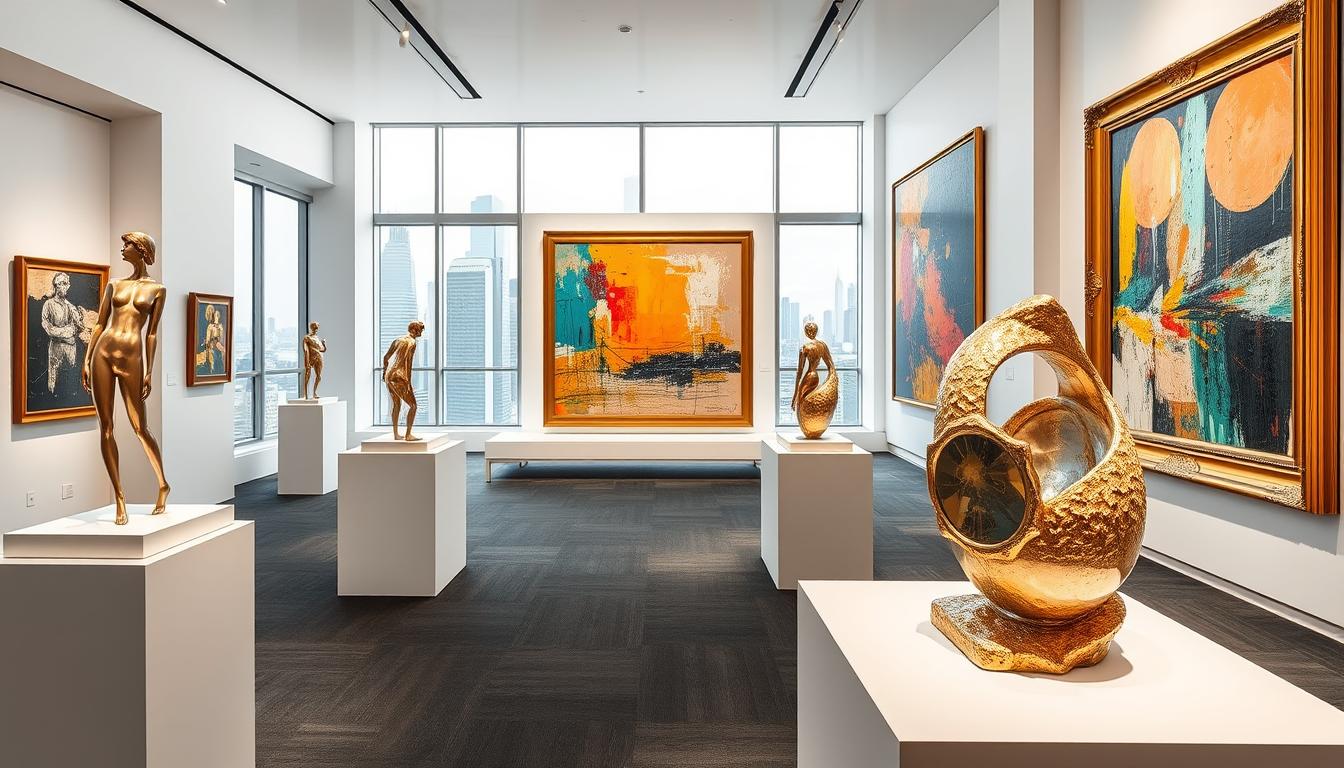
A museum afternoon can disappear into a rush of rooms, photographs and names you recognize. By the time you reach the exit, you may have seen a great deal without remembering what actually held your attention.
Try planning the next visit around a smaller ambition: leave with one work you want to think about again. You can still enjoy the building, the café and the pleasure of being somewhere different. Giving the itinerary some breathing room makes space for an encounter you did not anticipate.
This is a practical approach to visiting an art museum, not a test of cultural knowledge. You can use it in a major institution, a small local collection or a gallery you have passed many times without entering. Adapt it to your energy, access needs, budget and companions. There is no required number of rooms to complete and no promise that every work will move you.
Decide what kind of afternoon you want
Before choosing tickets, finish this sentence: “I would like this visit to give me…” Your answer might be a first introduction to an artist, time with a friend, an hour away from routine or a closer look at a familiar subject. That answer will help you choose among competing invitations once you arrive.
A first visit to a large museum can reasonably include an overview. A return visit can focus on one room. If an exhibition is about to close and matters to you, prioritize it. The principle is to choose deliberately rather than allowing the building’s size or a list of famous works to decide how you spend every minute.
Separate your main interest from optional extras. Name one collection area or exhibition you would be disappointed to miss, then one alternative in case circumstances change. Keep the rest genuinely optional. Three supposed priorities can easily become an itinerary with no space to notice anything unexpected.
If you are visiting with someone, compare expectations before booking. One person may want conversation while another wants quiet. One may enjoy reading every label while another prefers a quick circuit before choosing where to return. None of these preferences needs to win the entire afternoon. A little independent time and a clear meeting point can accommodate several kinds of enjoyment.
Do the practical research before you leave
Use the museum’s official visitor pages for opening hours, entry conditions and current exhibitions. Check the particular date, location and building you intend to visit. Institutions with several sites may have different opening days, entrances or ticket arrangements. Search snippets and older travel guides can leave out changes that matter.
Confirm whether general admission includes the exhibition you want, whether a timed reservation is needed and when the last entry is permitted. A closing time is not necessarily the time until which you can enter every gallery. Read the terms that apply to your ticket before paying, including any limits on changes, refunds or re-entry.
Do not assume that a work listed in an online collection is currently on display. Collection pages can describe objects in storage, on loan or temporarily unavailable. If a single work is the reason for a long journey, check its display information and contact the museum when the status remains unclear.
Consider the complete cost of the afternoon: travel, admission, any separate exhibition fee, food and optional purchases. If cost is a concern, look for the museum’s own information about free admission periods, concessions or local programs. Check eligibility rather than assuming a discount applies. A modest local visit can be more enjoyable than a prestigious outing that creates financial pressure.
For an example of the kinds of information to consult, The Metropolitan Museum of Art’s visitor page brings together planning resources and a museum map. Use the equivalent official page for your chosen destination. This guide does not assume that one institution’s policies apply elsewhere.
Make comfort and access part of the plan
Standing, walking, noise, lighting and unfamiliar routes can shape a museum visit as much as the art. Think about what would make the afternoon comfortable before you are tired or overwhelmed. Access planning belongs near the beginning, not as a correction after an ambitious route has already been chosen.
Review the museum’s accessibility information for entrances, lifts, seating, toilets and available support. If you need a specific service, find out whether it requires advance booking, whether equipment is limited and whether a companion should come with you. Ask the museum directly when a detail is important and the website does not answer it.
MoMA’s accessibility resources, for example, include a sensory map. The American Museum of Natural History’s sensory resources likewise illustrate how a museum can help visitors plan around their own needs. These are examples of resources to look for, not guarantees that every museum offers the same facilities.
Build a route around a comfortable amount of movement. Two nearby rooms with an easy place to rest may be preferable to several widely separated highlights. If stairs, dim spaces or crowded entrances present difficulties, resolve those route questions before treating an exhibition as a fixed part of the day.
Wear clothing and shoes suited to the visit you expect. Check bag and cloakroom rules before packing. Bring only what you can manage comfortably and what the venue permits. Where medication, food or other necessary items are involved, consult the museum’s specific guidance rather than assuming ordinary restrictions tell the whole story.
Slow looking can be adapted. Sitting, using verbal description, listening to an audio guide or choosing a less crowded work can all be appropriate. You do not need to stand silently in front of a painting to have a thoughtful encounter with art.
Give yourself an arrival, not just an entry time
A timed ticket can make the first few minutes feel like a race. Allow room for the ordinary transitions: finding the correct entrance, any security process, leaving a coat if appropriate and locating the galleries. The exact buffer depends on the venue and the journey, so use its current advice.
Once inside, pause to orient yourself. Locate the room you intend to start with, a place to rest and the way back out. A map is useful when it reduces decision-making. It becomes less useful when it turns into a checklist of every room you have not yet seen.
Ask a staff member a specific question if you need help: “What is the simplest step-free route to this exhibition?” or “Is there seating near that gallery?” Focused questions are easier to answer than a request for the entire museum’s best experience.
If the first room is crowded, consider beginning with the alternative you identified. There is no need to treat a temporary bottleneck as a verdict on the day. Avoid blocking entrances while deciding, and remember that the quieter room may contain something you would otherwise have missed.
Choose one work that gives you a reason to stop
Your first sustained encounter does not have to be with the most famous object in the building. Choose something that raises a question, creates a small surprise or makes you want to return your attention to it. Interest can begin with uncertainty as easily as admiration.
Perhaps the scale feels different from a reproduction you have seen. Perhaps an ordinary object has been presented in an unfamiliar way. Perhaps a portrait’s expression resists a quick description. You do not need to know the explanation before deciding that the work deserves a little time.
Give yourself permission to change your choice. If the location is uncomfortable, the crowd prevents access or the work does not hold your interest, move on. Persistence is useful when it reveals something; it is not an obligation to remain in front of an object because you announced a plan.
Where possible, begin with the work itself before reading everything around it. MoMA’s Slow Looking guide suggests giving yourself time, beginning with five minutes, noticing details and initially setting aside the wall label. Treat that as an invitation rather than a stopwatch requirement. A shorter, attentive encounter may suit you better.
Keep an appropriate distance and follow the gallery’s rules. Changing your position can be useful only where movement is permitted and safe. Never touch an object, cross a barrier or lean over a display to improve your view. Staff can advise on an accessible way to experience a work.
Separate what you see from what you think it means
One way to make looking more precise is to distinguish observation, interpretation and question. You do not need to write these down, but the distinction helps prevent a first impression from hardening into a fact.
An observation describes something you can point to: a figure faces away from the viewer, a line divides a surface, or one area is much darker than another. An interpretation proposes meaning: the figure seems isolated, the division feels like a barrier, or the darkness suggests uncertainty. A question keeps the investigation open: what context might change that reading?
For a hypothetical portrait, “the sitter’s hands are tightly clasped” is a different claim from “the sitter was anxious.” The first may be visible. The second needs more support and may remain uncertain. You can discuss the feeling the gesture gives you without claiming to know the person’s state of mind.
This distinction is particularly useful with unfamiliar cultures, religious subjects or historical events. Personal associations can begin a conversation, but they do not replace informed context. If you do not know what an object was made for, leave room for that knowledge to change your initial response.
You can use the same approach with abstract work. Describe the relationships you notice without insisting that every shape must represent an identifiable thing. Your response may concern scale, balance, repetition or the experience of occupying the same room as the object. Meaning does not always arrive as a story with characters and an ending.
Read the label as a second encounter
After spending some time with the work, read the available interpretation. Begin with the basic information: artist or maker where known, title, date, materials and any relevant contextual note. Pay attention to words that signal uncertainty or attribution rather than treating every line as equally definitive.
Now look again. Does knowing the material alter your sense of how the work was made? Does the date complicate an assumption? Does the title direct your attention somewhere you had not considered? Context can deepen the experience without invalidating every personal response you had before reading it.
Notice the difference between what the label establishes and what it leaves unanswered. A short label is selective. It may not explain every aspect of an artist’s life, an object’s ownership history or the debate surrounding its interpretation. An unanswered question is a useful starting point for later research.
If audio or digital interpretation is available, use it selectively. Choose a track that answers a question rather than feeling obliged to finish an entire sequence. Follow the museum’s guidance about headphones and sound. If a device makes the visit less comfortable or distracts you from the work, another format may suit you better.
You are also allowed to disagree with an interpretation, but make the disagreement specific. “I notice this detail differently” is more productive than dismissing context because it does not match your first reaction. The interesting part is often the evidence that led you in different directions.
Adjust the approach to the medium
Paintings, drawings and prints
Consider both the whole image and the relationship among its parts. A reproduction may have made a work look much larger or smaller than it is. In person, you can notice the actual scale, the framing and the way it sits among nearby objects. Respect display distances, especially with fragile works on paper.
Sculpture and three-dimensional objects
Work from the viewpoints the gallery permits. Some objects can be approached from several sides; others cannot. Notice how the display influences what is visible. Do not assume that an inaccessible back or interior has no significance simply because you cannot inspect it.
Film, video and sound
Look for information about duration and whether the work runs continuously or at scheduled times. Decide how much time you can comfortably give it. Entering midway through a loop may produce a different experience from seeing the beginning, so acknowledge what you have and have not encountered before judging the whole.
Design, clothing and everyday objects
Ask about use as well as appearance. Who might have handled the object, in what setting and under what constraints? Distinguish those questions from guesses about the answers. Museum information may reveal a purpose that a display case alone cannot communicate.
Across media, avoid forcing a single method onto everything. Some works reward close inspection; others depend on duration, movement or surrounding space. Let the information available and your own access needs shape the encounter.
Make conversation without making it a test
With a companion, try taking turns choosing a work. Give the person who chose it room to say what caught their attention before offering an interpretation of your own. This small courtesy can keep the better-informed or more talkative visitor from setting the terms of every exchange.
Ask about a specific response. “Which part made you stop?” or “What changed after you read the label?” gives the conversation somewhere to go. If someone says they dislike a work, curiosity is more useful than correction. They may be reacting to a color, a subject, a display decision or simply fatigue.
Do not use art knowledge as a social gate. Historical information can enrich the conversation when it is relevant and accurate. A stream of names and dates can also crowd out another person’s observations. If you are uncertain about a detail, say so and check later rather than presenting a confident guess.
Different reactions are a reason to look again, not a problem that requires agreement. You might find a room restful while your companion finds it bleak. Ask what each of you is responding to. The point is not to average the answers into a verdict.
Respect other visitors’ experience. Speak at a considerate volume, leave room at labels and avoid holding a long discussion in a narrow passage. If the conversation needs more space, carry it to the café or a seating area.
Give solo visits a shape of their own
Visiting alone can make it easier to follow an unexpected interest. You can return to a room without negotiating, leave when your attention fades or spend longer with a work that another person might pass by.
A small structure can help if freedom initially feels aimless. Choose a starting area, one work for sustained attention and a place to pause afterward. You can change all three, but they give the afternoon a beginning, middle and end.
If you want conversation, check for an official tour or gallery discussion that fits your interests. Do not assume every staff member is available to give an extended interpretation while performing another role. Ask where to find the right resource.
If you prefer solitude, you do not need to turn the visit into an exercise in self-improvement. Looking, enjoying the space and leaving with one remembered detail are enough. A thoughtful outing can be quiet without producing a page of notes.
Visit with children without turning curiosity into homework
For a family visit, choose a scale that suits the youngest or least comfortable participant. A short route with a clear stopping point is often easier to negotiate than an open-ended promise to “see the museum.” Review the venue’s family resources and rules before arrival.
Offer choices within the plan. A child might select which of two nearby rooms to visit first or choose one object for everyone to discuss. Ask what they notice before explaining what they are supposed to see. Avoid quizzes whose main purpose is to produce the adult’s preferred answer.
Agree on practical boundaries: staying together, keeping a safe distance from objects and following staff instructions. If sketching or activities are available, check which materials and locations are permitted. A museum’s own family guide can provide a more suitable starting point than an improvised activity that conflicts with gallery rules.
Plan food, toilets and rest around actual needs. Leave before the outing becomes a contest of endurance. An enjoyable short visit can make a return feel inviting; completing more galleries is not worth making the place feel punitive.
Plan a rhythm, not a marathon
There is no ideal duration for everyone. The useful question is how long you can remain interested and comfortable. Build breaks into the plan before fatigue becomes the only reason you stop.
As an illustrative structure for an unhurried ninety-minute visit, allow the opening portion for arrival and orientation, a main stretch for one collection area, a pause, and a short final return to the work that stayed with you. This is a planning example, not a museum recommendation or a claim that ninety minutes produces a particular benefit.
A larger half-day can use the same pattern with a longer meal or rest between two distinct areas. Avoid filling the break with another compulsory attraction. If everything is scheduled, the word “unhurried” has no practical meaning.
Check how you feel before moving to the next room. If every work is beginning to resemble the last and you are reading labels without taking them in, pause or finish. More exposure is not automatically a better experience.
Make the journey home part of the decision. A long walk to transit, an evening commitment or a difficult drive can change how much energy you want to spend inside. Leaving while you still have attention to spare is a reasonable choice.
Use the camera deliberately
First check the museum’s photography rules and any restrictions for a particular exhibition. Permission can vary by room or object. Follow guidance about flash, equipment and where photography is allowed. When unsure, ask rather than copying what another visitor is doing.
If photography is permitted, decide what you want the image to do. A reference photograph may help you find the collection entry later. A picture of a detail may preserve a question. Neither requires recording every object you pass.
Try looking before raising the phone. Once you have taken the image you need, return to the work for a moment. A photograph can record an appearance, but it may not preserve the scale, texture, sound or feeling of being in that space.
Be considerate of people nearby. Do not ask others to clear a public gallery for your photograph, obstruct a route or assume strangers want to appear in your images. If your main interest becomes composing the perfect shot, decide whether that is how you want to spend the visit.
Bring home one question and one reliable reference
Before leaving, make a brief note about the work that held your attention. The title, maker and museum are usually enough to begin finding it again. If identification is uncertain, use the museum’s permitted resources or ask for help rather than relying on a vague visual memory.
Add one sentence of your own: what surprised you, what changed or what you would like to understand. Keep it separate from any factual note taken from the label. That distinction will matter when you return to the memory later.
Start follow-up research with the institution’s collection entry or exhibition material. Check whether the page discusses the exact work you saw, not simply another piece with a similar title. Look for the author’s name, publication context and date when evaluating a longer interpretation.
If the subject raises questions about provenance, cultural context or contested history, resist settling them with one attractive caption from social media. Read more than one informed account where needed and distinguish documented facts from interpretation. You do not have to resolve a complex debate on the journey home.
A souvenir is optional. A postcard can be meaningful when it connects to the encounter you had; a purchase made out of obligation is less likely to matter. You can also leave with a note, an official collection link and a reason to return.
When the afternoon does not go to plan
The exhibition may be crowded, a room may be closed or your energy may be lower than expected. Use the alternative you identified, shorten the route or ask staff about a manageable option. A changed plan does not erase the value of the time you have.
If a work is upsetting, you can step away. You do not owe every object sustained attention. If you want more context, seek it when you feel ready rather than forcing yourself to stay because the visit was supposed to be enriching.
If nothing especially moves you, notice something more modest: a material you had not considered, a question about the display or an unexpected conversation. Avoid inventing a profound response to justify the ticket. Some visits become meaningful only when another work later brings them back to mind.
Before booking a return, ask what you would change. A different time, smaller institution, guided visit or more accessible route may fit better. The adjustment should respond to your experience rather than to an idea of how a culturally accomplished person ought to visit.
Leave with a reason to look again
The most memorable museum afternoon may be the one that leaves something unfinished. You have seen enough to become curious, but not so much that curiosity has become exhaustion. One work has a place in your memory, and you know how to find it again.
For your next visit, choose a starting point, check the practical details and make room for a sustained encounter. Read, listen, converse or sit quietly as the situation allows. Let the afternoon belong to the attention you can genuinely give it.
You may discover an artist, revise an assumption or enjoy a good conversation in a setting that changes its pace. There is no need to measure success by the number of rooms behind you. One encounter worth returning to is a generous beginning.

