
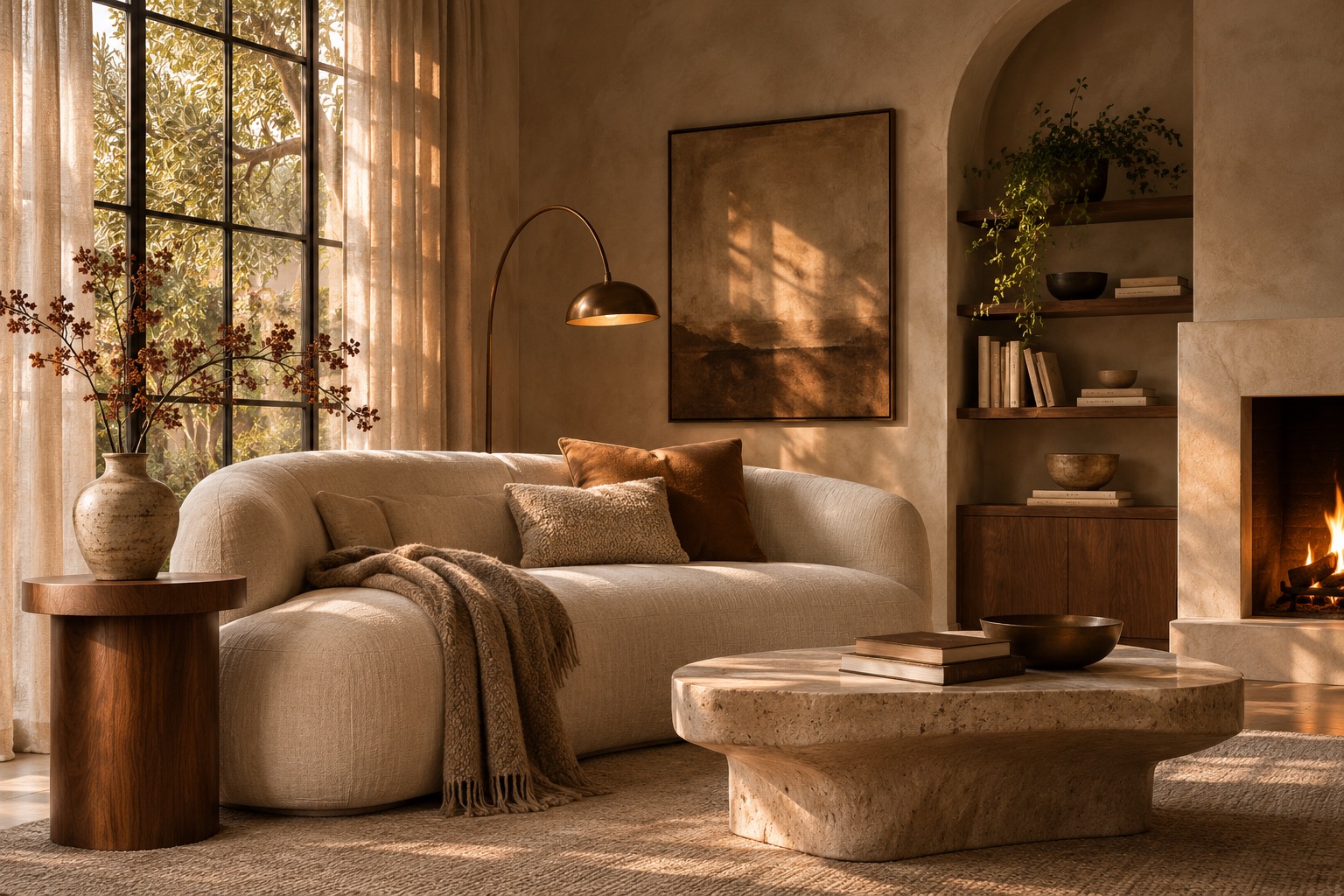
A room can feel luxurious before anything new arrives. The difference may be a better place to read, a softer pool of light or enough space around a favorite object to appreciate it. For the season of longer evenings and more time at home, we are thinking about comfort with intention.
Begin with the evening, not the photograph
Look at the room when you actually use it. Where do you sit with a book? Where does a guest put a glass? Is the chair that looks beautiful comfortable for more than ten minutes? These ordinary questions are a good starting point for an interior that feels welcoming rather than merely styled.
Choose one activity to improve first. A reading corner may need a lamp and a small table more than another decorative object. A conversation area may benefit from turning chairs toward each other. Work with the furniture you own before deciding what is missing.
Use light to give the room depth
Our preferred starting point is a combination of general light, a focused reading light and a quieter accent near an object or textured wall. Try the lamps separately and together. The aim is useful illumination with variation, not a room in which every surface is equally bright.
When choosing bulbs, the Federal Trade Commission’s lighting guide explains that lumens describe brightness, while watts describe energy use. The Lighting Facts label also helps you compare warm and cool light appearance. Check the fixture’s requirements and dimmer compatibility rather than assuming every bulb will behave the same way.
Let texture do some of the decorating
A restrained color scheme becomes more interesting when the materials differ. Linen beside wood, a matte ceramic next to glass, or a woven throw on a smooth chair can give a room depth without adding a crowd of objects. Choose materials you enjoy touching and can realistically maintain.
Before a substantial purchase, examine a sample in your own room during daylight and after dark. A color that seems perfect in a showroom can look quite different beside your flooring or under your lamps. Measure the piece, the route into the room and the space needed to use it comfortably.
Give meaningful objects room to breathe
Instead of filling every surface, create one small arrangement around something personal: a ceramic brought home from a trip, a favorite book or a framed photograph. Leave practical space for daily life. A home should support your habits, not require constant resetting to look good.
The same idea runs through our guide to choosing a memorable luxury stay: start with the experience you want, then choose the details that support it. At home, the most convincing expression of luxury may be a room you look forward to using every evening.

