
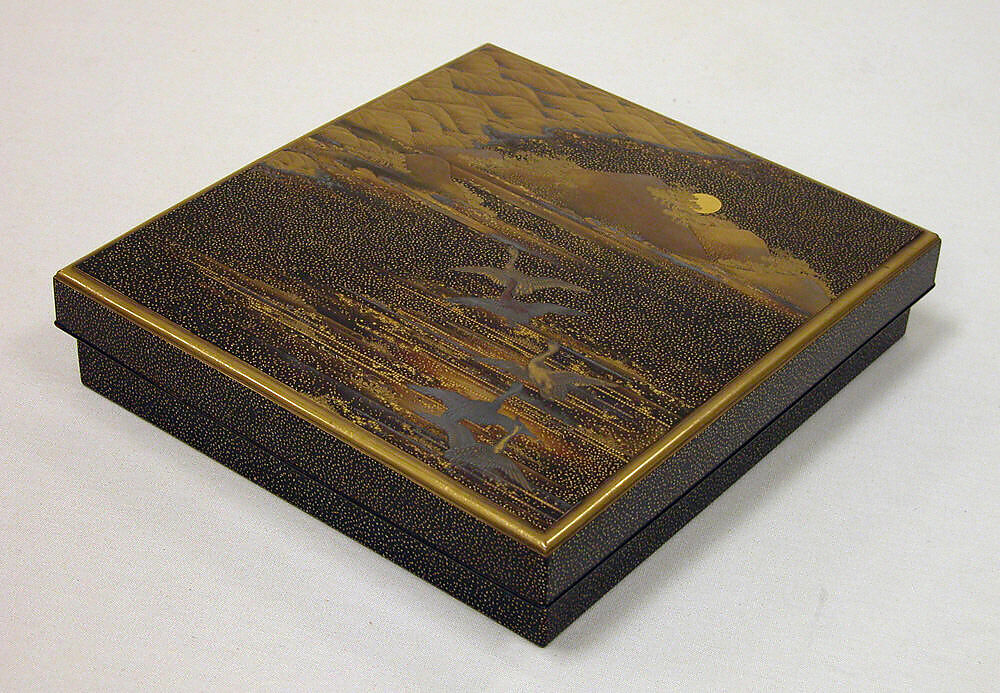
Start with a box made to hold documents. On its dark lacquered surface, cranes fly above trees on a golden coastline. You can make out the scene before thinking about what it took to create it: the gold began as powder, sprinkled onto lacquer while it was still wet.
The technique is called maki-e, or “sprinkled picture.” It’s the focus of Adorned in Gold: Japanese Lacquer from the Jacqueline Avant Collection, which opened November 21 at the Smithsonian’s National Museum of Asian Art in Washington, D.C. The exhibition follows the technique into everyday life in Edo-period Japan, from boxes people handled at their desks to combs, hairpins and small cases they wore.
A scene small enough to carry
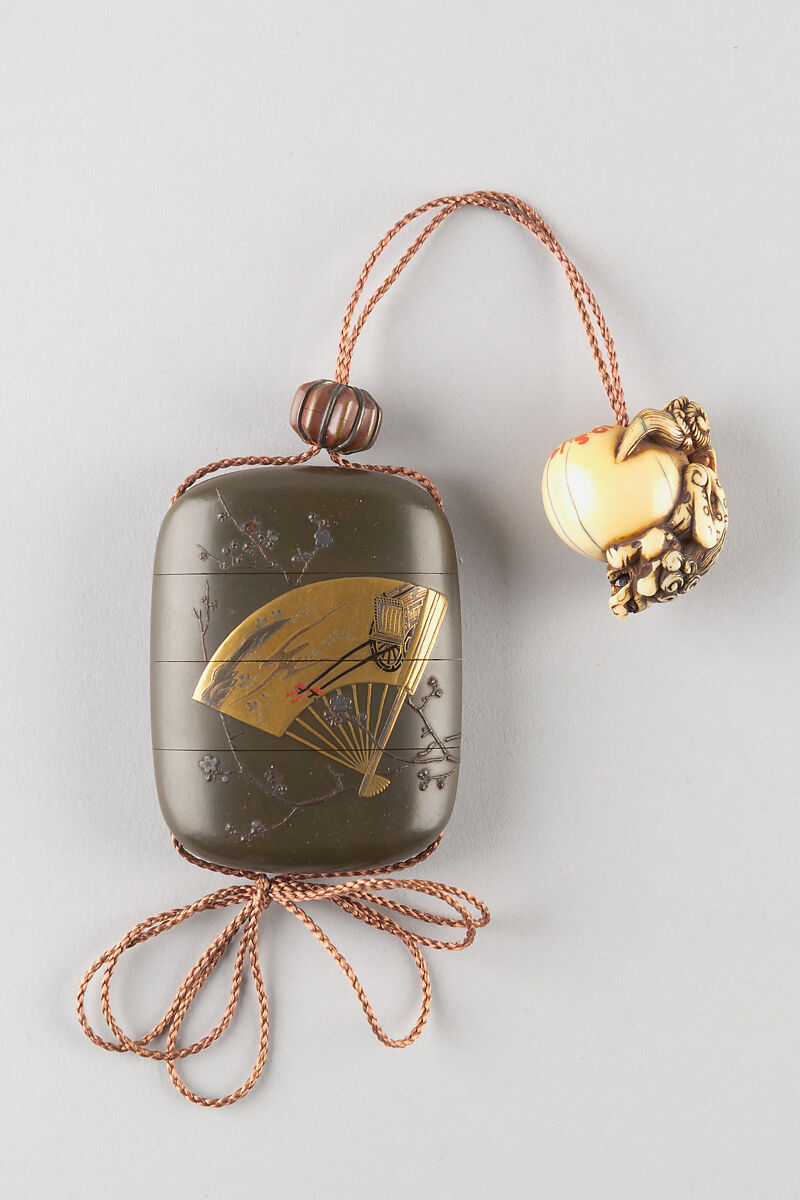
An inrō was one of those portable surfaces. Edo-period men wore these small cases at the obi, or sash, securing the cord with a carved counterweight called a netsuke. A design that might first register as a flash of gold had more to offer the closer you got. A separate example at The Met, a nineteenth-century case decorated with fans and a plum branch, makes that intimacy easy to see. The design belonged to something that moved with its wearer.
Avant came to Japanese art through literature and had an eye for fashion in her own right. The Smithsonian’s exhibition text notes that she encountered The Tale of Genji in college and modeled for Ebony Fashion Fair in the 1960s. For a closer look at an object in her collection, open the museum’s 3D model of a plum-blossom writing box. Follow the annotations and look inside. It’s a chance to see how the maker carried the design beyond the lid.
Adorned in Gold runs through January 2, 2028, in Gallery 25 of the museum’s East Building. Admission is free, with no pass required.
Featured image: Writing Box with Flying Geese in the Autumn Night, Japan, 18th century. The Metropolitan Museum of Art, Gift of Mrs. George A. Crocker (Elizabeth Masten), 1937. Public Domain. Both photographs show separate Met collection examples, not works in the Smithsonian exhibition.