

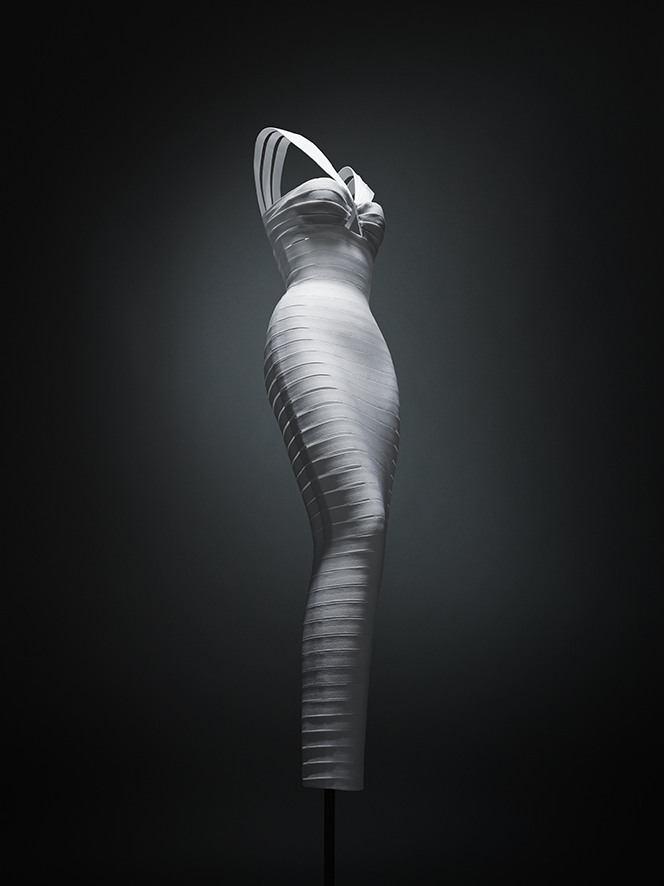
Start with the waist, then follow the line out. Azzedine Alaïa could bring cloth close to the torso and give it room elsewhere, changing the silhouette without losing sight of the person inside it. Azzedine Alaïa: Sculpting Fashion, opening November 21 at San Francisco’s Legion of Honor, makes that judgment visible. It is the first major U.S. retrospective devoted to the Tunisian-born, Paris-based designer, and it runs through April 11, 2027.
Follow the cut
Alaïa trained in sculpture in Tunisia before turning to fashion. The connection is easy to see in the way his clothes occupy space, but it begins at the worktable. According to the Fondation Azzedine Alaïa, he stayed involved in patternmaking, cutting and fitting, and presented collections on his own timetable. The fitting mattered because the exact place where cloth grips or falls away can change how a garment looks from the side, how it moves and how its wearer can stand in it.
That is an especially useful way to approach the spring/summer 1990 couture dress pictured above. Start at the point where fabric sits closest to the body, then look for the places where the outline opens up. You can read the dress as a series of decisions about volume. On a gallery visit, try looking at one piece from several angles before moving to the next. A front view gives you the outline; a side view tells you how far the fabric stands away from the body.
A dress with a life beyond the runway
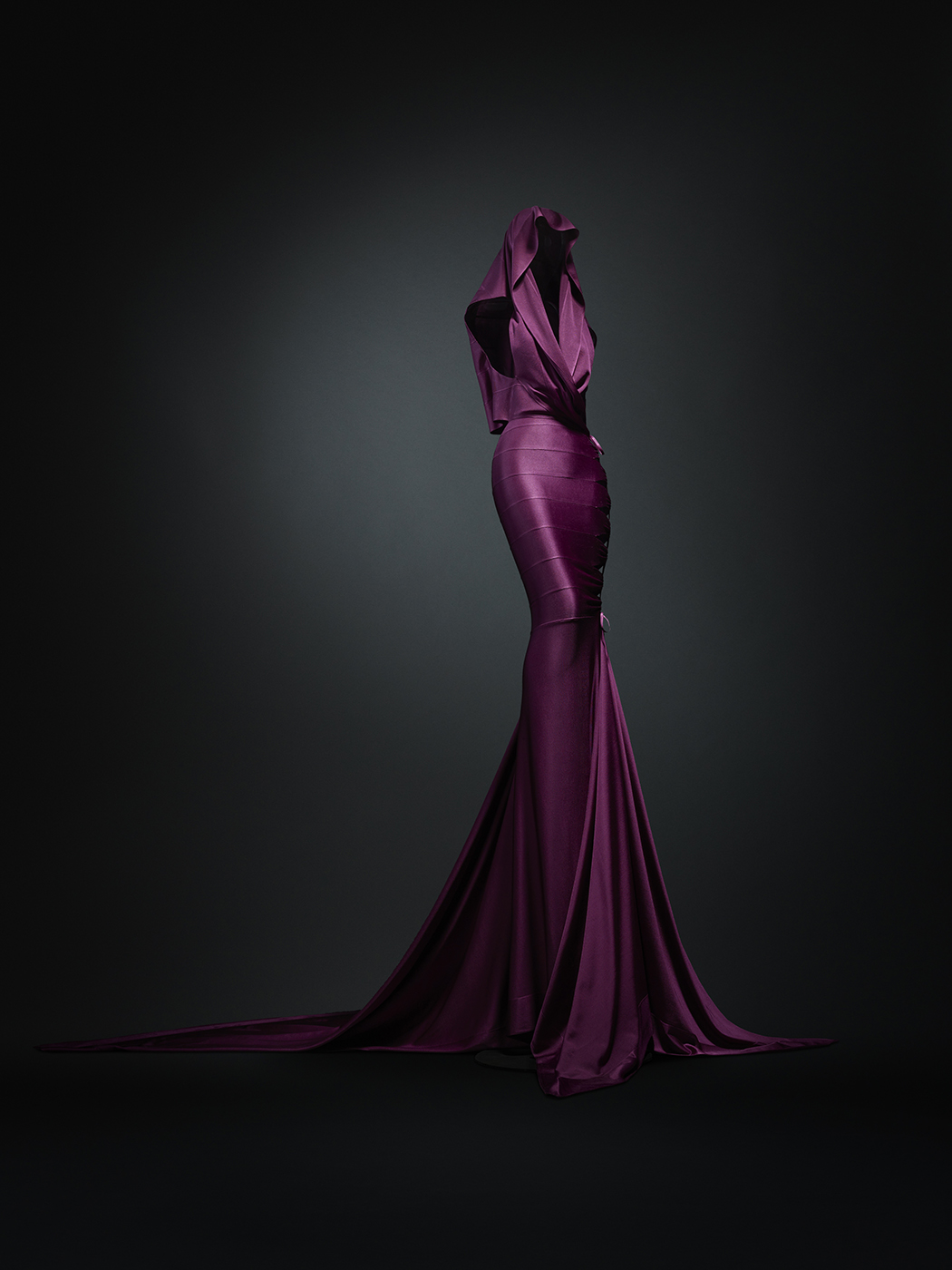
The Grace Jones dress gives the exhibition’s premise a second test. The Fondation dates it to Alaïa’s spring/summer 1986 couture collection, although Jones wore it at the Palais Garnier in October 1985. On the gallery form, you can study the garment’s construction. Knowing that Jones chose to wear it off the runway invites another question: what did that shape let her do with her presence in a room?
The show brings together about 80 of Alaïa’s garments and pieces from the historical fashion collection he assembled, including work by Cristóbal Balenciaga, Elsa Schiaparelli and Madeleine Vionnet. Seeing these pieces alongside his work gives visitors a chance to compare how different makers used the cut to direct attention or create space. If you have time for only one comparison, pick an Alaïa dress and a piece by another designer and trace each silhouette from shoulder to hem.
Plan a visit
The exhibition runs November 21, 2026, through April 11, 2027, at the Legion of Honor in San Francisco. The Textile Arts Council lists an opening-day conversation at 1 p.m. in the Gunn Theater with fashion journalist Cathy Horyn and co-curator Olivier Saillard, moderated by co-curator Laura L. Camerlengo. Check the museum’s exhibition announcement for visit details.